SEO today: beyond keywords, among AI, quality content and online authority
Modern SEO beyond keywords: AI, E-E-A-T, zero-click search, content pruning, accessibility, first-party data and the building of topical authority in the long term.
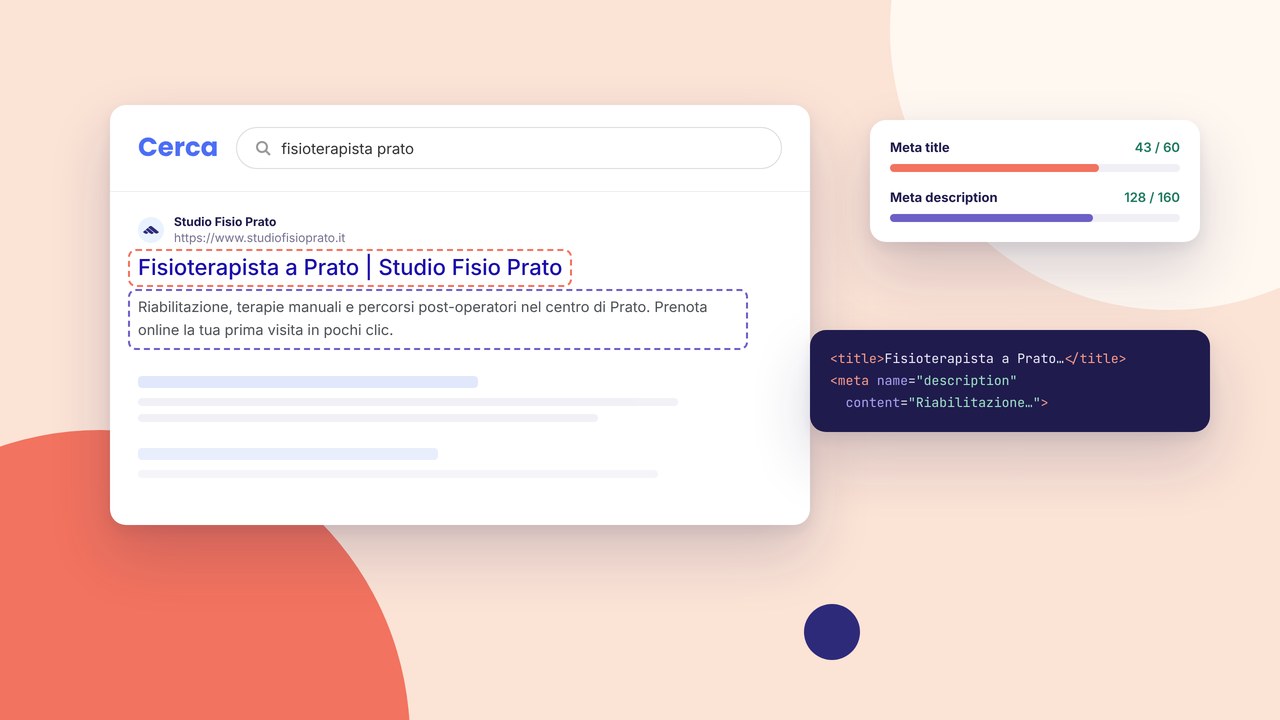
SEO has always been seen as something that “works behind the scenes”: meta tags, keywords, backlinks, codes that almost nobody sees but that can change the destiny of a site. For years little was enough: some technical optimisation, some links around and a text full of the right words. Today, however, it no longer works like that.
SEO is becoming less a “technical trick” and more and more a communication strategy. It is not only about convincing Google, but about succeeding in speaking to people in the right way, at the right moment, through content that really makes sense for whoever reads it. And paradoxically, precisely while search engines become more sophisticated, what counts most goes back to being something very simple: being useful.
In recent years the arrival of artificial intelligence has changed the rules of the game. Search engines no longer limit themselves to showing a list of links, but they start to answer, synthesise, advise. In practice, they become one more filter between our site and the user. This means that the classic idea of “ranking first” is no longer enough: what really counts is how your content is interpreted, extracted and shown inside these new interfaces.
In this context, filling the pages with generic texts, perhaps written only to attract traffic, is a boomerang. Superficial content can also bring a few visits at the beginning, but it does not build trust, it does not bring real results and it risks being discarded by the same algorithms that promised to “help you”.
The SEO of the future tends in the opposite direction: less quantity, more depth. Fewer photocopy articles, more content that really enters the problem of whoever is searching and faces it with concrete examples, clear explanations, real cases.
A key point is the search for intent. A keyword is not only a word written in a search box, it is the reflection of a need. There are those who search to inform themselves, those who want to compare solutions, those who are ready to buy. SEO, today, is understanding in which of these moments you want to be present and what you must say at that precise instant. An article written for whoever is “curious” cannot be the same as for whoever is “ready to buy”. If the content does not respect this level of awareness, the page becomes only noise.
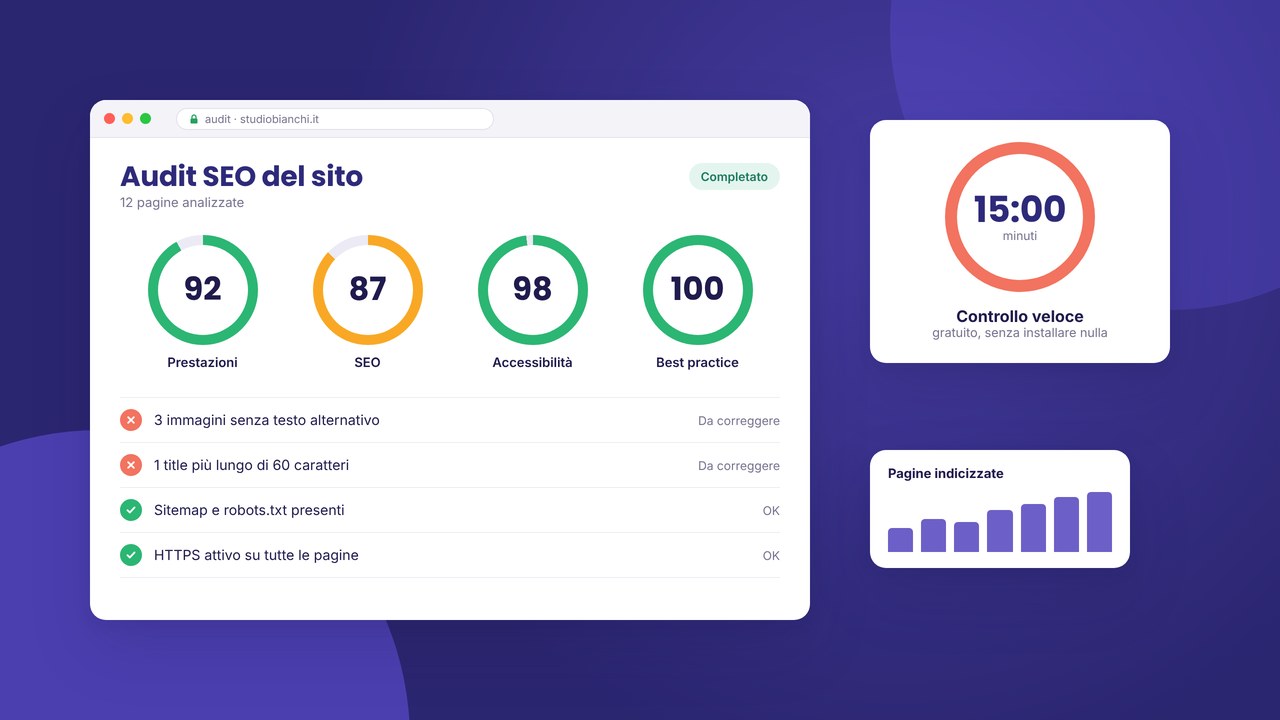
Alongside the content, the technical part remains fundamental, but it is no longer “the secret trick”: it is the minimum base to be able to play the match. A slow site, full of errors, with a confused structure and indexing problems, already starts with the brake on. Technical SEO is what allows the content to emerge: a clear architecture, the URL structure, the correct use of tags, structured data, good performance on mobile. They will not give you results on their own, but without them you will hardly get far.
Ever more important is also
credibility. Search engines try to understand whether what you publish is reliable, whether it comes from someone who really knows what they are talking about and whether people trust you. It is not enough to “seem experts”: you need concrete signals.
Citing real sources, telling direct experiences, showing case studies, giving space to real faces and names, improving the “About me/About us” page, taking care of reviews, being present in external places (directories, portals, mentions on other sites). All of this contributes to building that idea of authority that is becoming the heart of modern SEO.
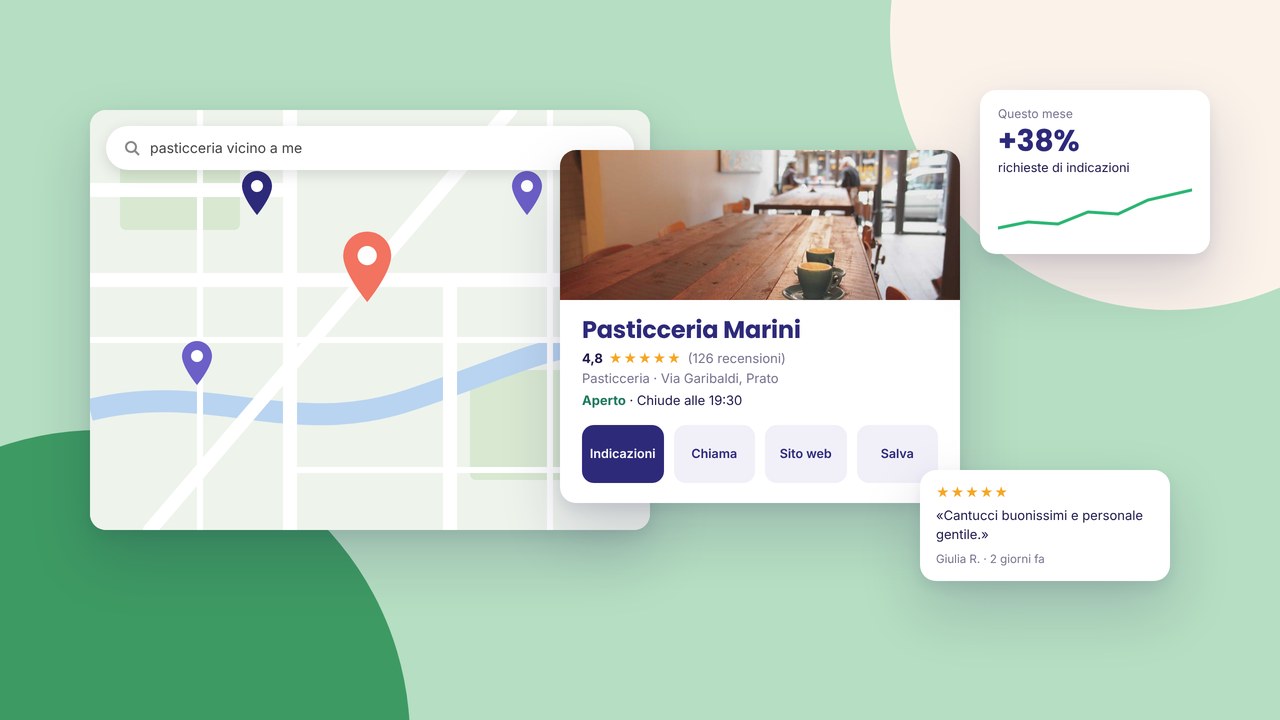
Local SEO follows the same logic. Once it was enough to appear on a map, today the difference is made by authentic reviews, updated photos, precise information on hours, services, conditions. Anyone searching for something “near me” does not only want the first result: they want the most reliable, the clearest, the one that immediately transmits a sensation of seriousness. Here too, SEO is not a trick: it is the work of taking care of the information that people see even before they arrive on your site.
On the data front, the passage is from aggressive tracking to intelligent measurement. With fewer third-party cookies and more attention to privacy, it becomes fundamental to learn to read well the data you really have available: what people do on your site, which paths they follow, which content converts, what makes them come back. The future of SEO is not “more data”, but better data, used to improve content, structure and messages.
The inevitable question is: what role does AI have in all this? Artificial intelligence can write texts, summarise, propose variants, help you do research more quickly. It can suggest ideas, help you find related topics, understand related questions. But there is a point beyond which it cannot go: it cannot replace your real experience. Content created only by a generative model, without your review, your voice, your examples, risks being flat, impersonal and, above all, the same as a thousand others.
The SEO that makes sense in the long term is the one in which you use AI as support, but you take the decisions: what to publish, what to go deeper on, which cases to show, which words to use to really tell who you are. It is an ally, not a magic shortcut.
Then there is the most silent but fundamental part: consistency over time. SEO is not a stroke of luck, it is a job of continuous maintenance. Updating the articles that work, eliminating what is no longer needed, merging similar pieces, improving the content that receives visits but does not convert. It is an iterative process. You do not publish and disappear: you publish, observe, adjust, clean, improve.
Anyone who sees SEO as something to do “only once” will always find themselves chasing. Anyone who sees it as a continuous process, instead, accumulates an advantage.
Finally, there is a point often neglected: the relationship between SEO and brand. In the long run, one of the strongest signals for a search engine is whether people search for you by name. If they start to type your brand next to the service, if they come back to your site directly, if they recognise you among the results.
SEO is not only “being found by whoever does not know you”, but also strengthening the bond with whoever has already met you. A newsletter, quality content, a consistent presence on the channels, care of the user experience: all of this is not catalogued as “SEO” in the strict sense, but it deeply influences the way your site is perceived and, consequently, rewarded.
In the end, the SEO of the future will be less tied to shortcuts and little tricks and ever more intertwined with the way you communicate, design and grow your online project. It is not only a set of rules to apply, but a way of looking at your site: from the side of whoever is searching, not from the side of whoever only wants to rank.
Anyone who chooses this path – slower, more aware, but much more solid – will not have to chase the umpteenth algorithm update with the fear of losing everything. Because they will have built something that has value in itself: clear content, a clean structure, trust.
And it is precisely this type of SEO that will continue to work, even tomorrow.
Zero-click search: adapting the strategy
Ever more searches close without a click: featured snippets, the knowledge panel, AI Overviews. It is not a defeat: it means that your content can be the cited source. Optimise for structural clarity (H2/H3 that answer questions), definitions at the opening of the paragraph, lists and tables, FAQ schema. Monitor impressions vs clicks in Search Console: a falling CTR with growing impressions can indicate visibility in snippets without direct traffic, but brand awareness all the same.
Content pruning and consolidation
Fewer weak pages, more authority on the rest. An annual audit: identify content with zero traffic for 12+ months, duplicates, obsolete articles. Options: update and strengthen, merge into a more complete guide with a 301 redirect, or noindex/deindex if they are not needed. Google rewards carefully made sites, not sites that accumulate noise.
SEO and accessibility: correlated signals
An accessible site is often also SEO-friendly: hierarchical titles, alt text, descriptive links, a semantic structure, contrast and keyboard navigation improve understanding for users and crawlers. WCAG 2.2 and Core Web Vitals share the attention to the real experience. Investing in accessibility is not a side cost: it is product quality that is reflected in metrics and reputation.
Building topical authority over time
Topical authority is built with constancy: clusters of interconnected content, regular updates, citations from external sources, recognisable authors, original data. There is no shortcut: a site that publishes 4 in-depth articles a year on its core business often surpasses one that publishes 50 superficial ones. Quality, depth and consistency beat volume in the medium-long term.