Local SEO: how to be chosen by the right people in your area
A complete guide to local SEO: Google Business Profile, NAP, reviews, territorial landing pages, local citations, metrics and a 90-day plan to be chosen in your area.
Local SEO is the thing many people discover late, when they realise that their site “is not working” even if, in theory, it is well made. They have worked on the content, fixed the blog, taken care of the services pages… but when someone searches “masseur in [città]” or “design studio near me”, the others always appear.
It is at that moment that you understand a simple thing: if your business lives in a physical place, you cannot ignore local SEO.
Local SEO is not a “smaller” version of SEO, it is precisely a different way of thinking about visibility. It is not only about ranking for generic keywords such as “sports masseur” or “interior designer”, but about being the right result for the right people, in the radius in which you can really work. You do not need to be first in all of Italy, you need to be the obvious choice when someone searches in your area.
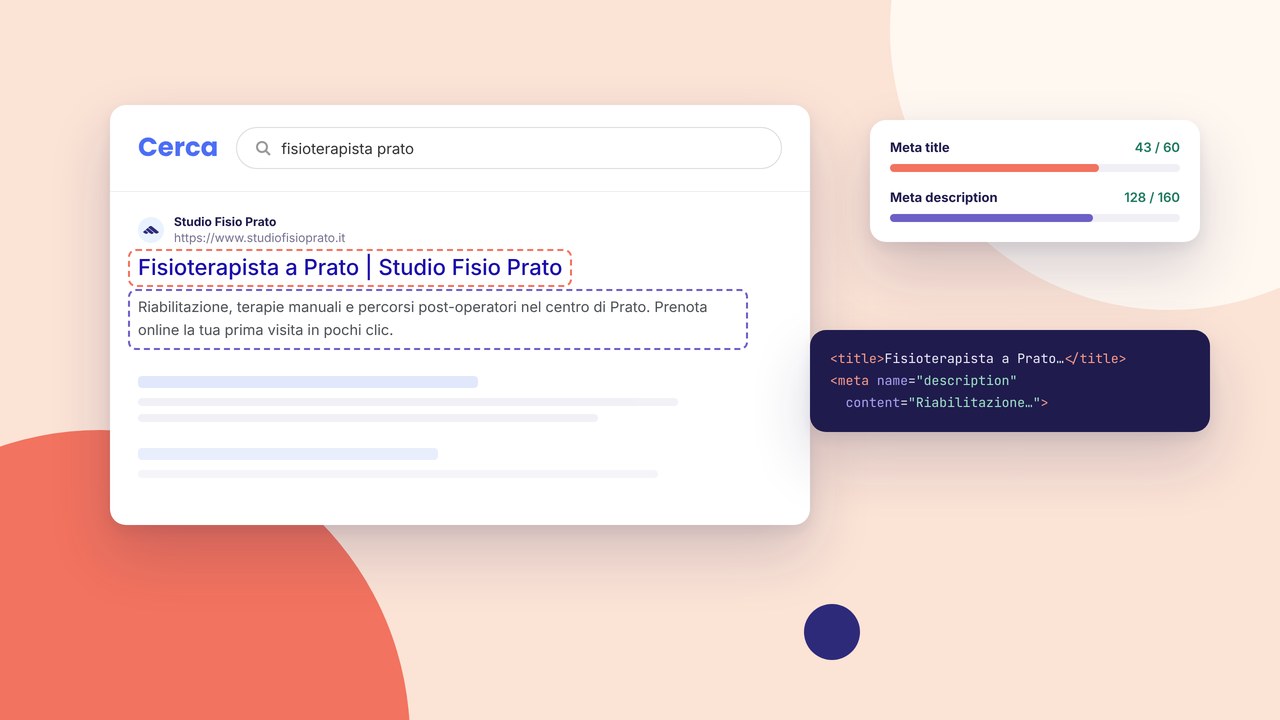
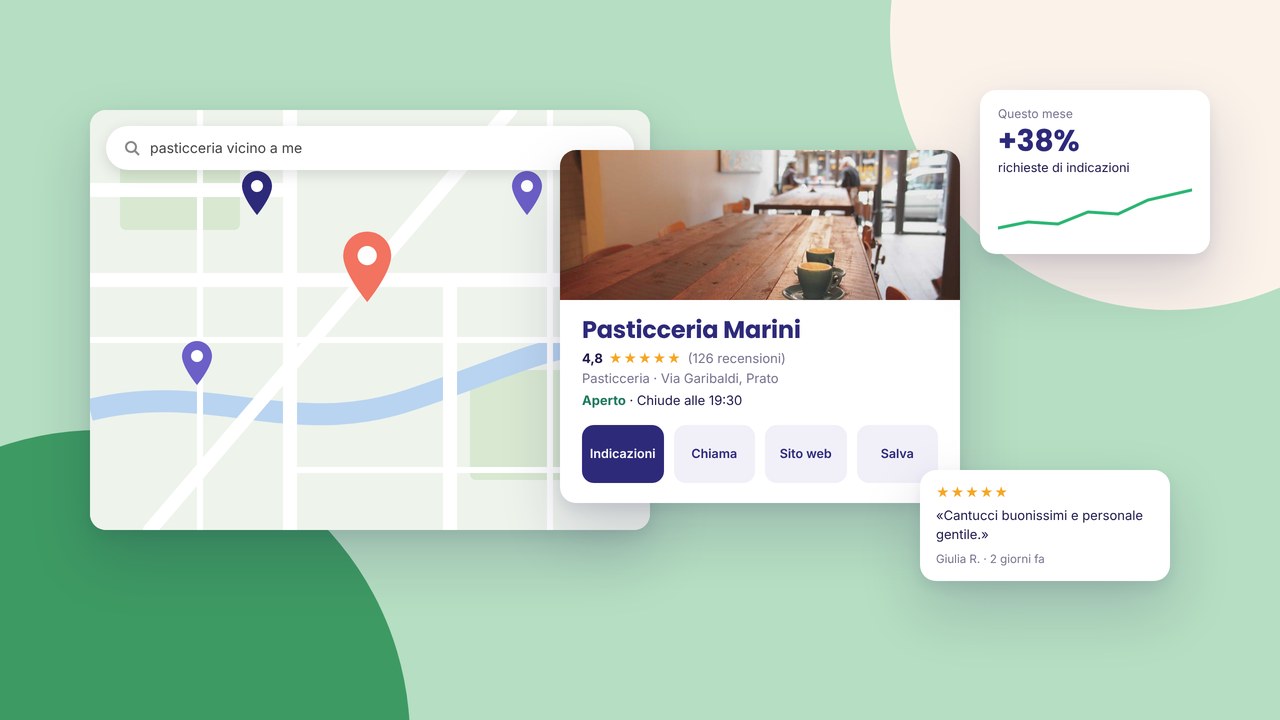
The first point is to understand that, in local SEO, your site is not the only protagonist. Often the first impact with your business is not the homepage, but the listing on Google (Google Business Profile), the map, the reviews, the photos, the hours.
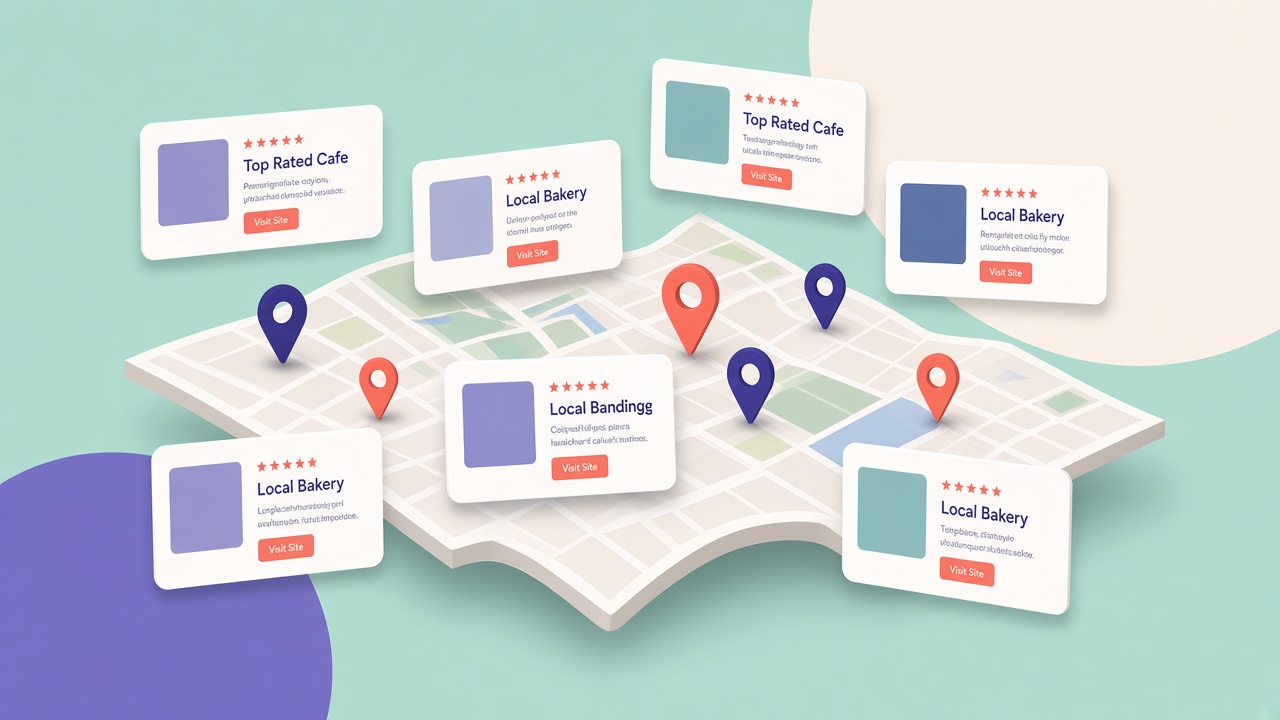
A user who searches “physiotherapy studio [città]” will probably see first the maps with three results in evidence and only afterwards the websites. If you are not in there, it is as if you did not exist.
That is why the Google listing almost becomes a “second site”: it must be taken care of, updated, thought through. A consistent name, the correct category, a clear description, services, hours, a precise address, a real phone number, photos that really represent who you are. It is not a field to fill in in a hurry, it is a central piece of your online presence.
Here a concept comes in that is often treated as a detail, but is not: the consistency of the data, the famous NAP (Name, Address, Phone).
If your name appears in one way on the site, in another on local directories, with a slightly different address on Google and perhaps with an old number around the web, you are sending confused signals.
For people it is annoying (they no longer know where to find you), for search engines it is a doubt: “are we sure that these references talk about the same business?”.
Local SEO, at its base, is also this: aligning all the fundamental information, wherever you are present.
Then there is the topic that many pretend not to see: reviews.
Reviews are not only stars. They are an indicator of trust for people and a quality signal for the algorithms. You cannot control them entirely, but you can decide how to manage them: asking for feedback from the right people at the right moments, answering in an adult way even to criticism, thanking when someone spends time to tell their experience.
A business with few reviews, perhaps years old, communicates abandonment. A reality with continuous reviews, present replies and a human tone gives the opposite sensation: here there is someone who is there, and who cares.
Local SEO, however, is not exhausted in the Google listing. Your website remains fundamental, but it must speak clearly of your link with the territory.
It is not enough to write “we operate throughout Tuscany” and slip in a list of cities at the bottom of the page. It works much more to have content that really shows your presence in an area:
– pages dedicated to the main cities/areas in which you work
– concrete examples of projects done there
– clear indications on how to reach you
– references to neighbourhoods, landmarks, real contexts.
It is not about “spamming” the name of the city, but about making it clear – to whoever reads you and to the engines – that you really exist in that place, that you are not trying to rank in the middle of the world without being anywhere.
Then there is another point that often makes the difference: the structure of the site.
If you are a multifunctional centre, a studio with several professionals, a business with various services, it does not make sense to enclose everything in a generic page hoping that “Google will understand”. It makes much more sense to create a clean structure, with clear pages for your main services, each with its piece of local content.
Less chaos, more clarity.
This does not only help the search engine, it helps above all whoever lands on the site and wants to understand, in a few seconds, whether you are the right person for their problem.
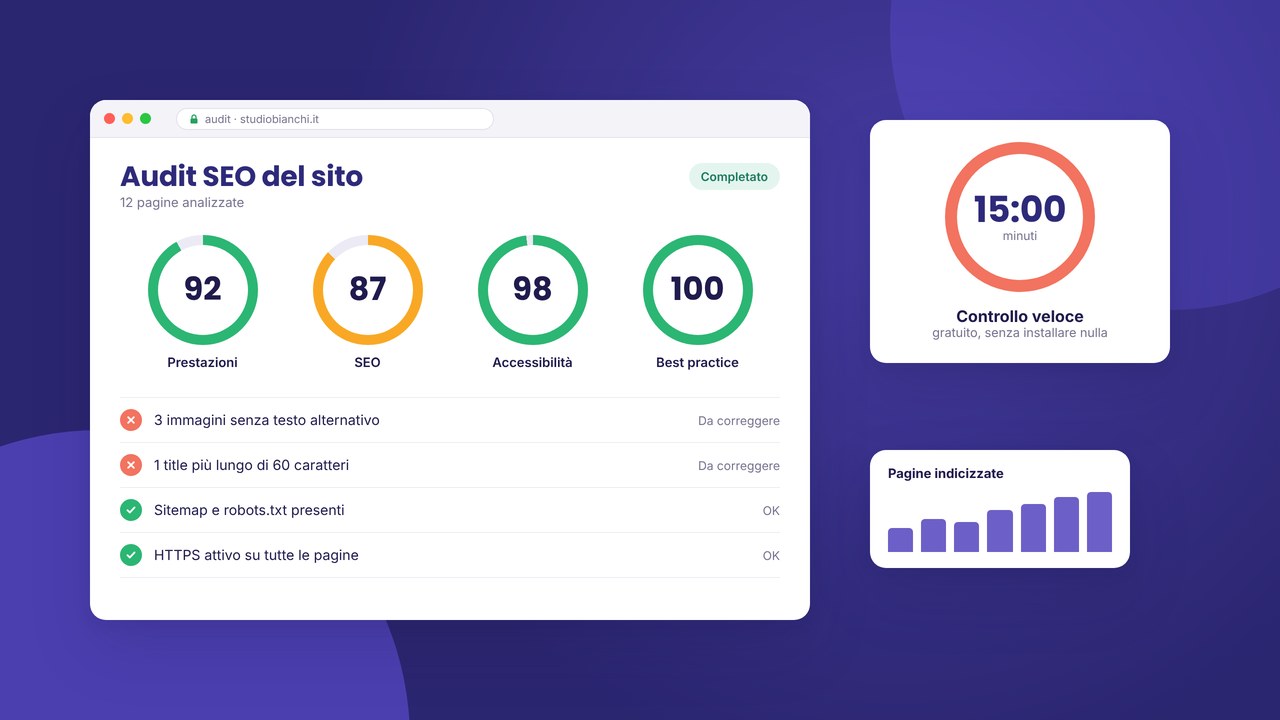
The technical part weighs again here too. A slow site, not optimised for mobile, with a complicated menu, forms that do not work well on a smartphone… is an enormous problem in a local perspective. Because very many “near me” searches are born from a phone, on the move.
If a person finds you, clicks, but then struggles to use the site, it is as if you had slipped from their hands a few centimetres from the door. Local SEO is not only being found, it is also succeeding in retaining and guiding whoever arrives.
Then there is the aspect of local citations: appearing in serious portals, professional directories, institutional sites, trade associations, local blogs. They are not only “links for SEO”, they are external confirmations that give solidity to your presence in a given area.
If a user searches your name and sees the site, the Google listing, social pages and perhaps you also appear on the site of the coworking where you work, on a sector portal and in some local article, the perception changes.
From “one of many” to “a real, rooted reality”.
All of this, however, holds up only if underneath there is a thing that cannot be faked: the real quality of the service.
Local SEO can help you emerge, but it cannot replace what happens when a person comes through the door, calls you or entrusts you with a project. Reviews, word of mouth, returning clients… everything goes through there.
The difference, in the long term, is made by those details that no algorithm can fix: punctuality, clarity, care, listening.
Local SEO, in the end, is only the digital way of widening the perimeter of your word of mouth.
What makes sense to do today is not to chase shortcuts, but to build a solid system:
– consistent information everywhere
– a carefully made and living Google Business listing
– a clear, fast site, designed for the territory
– content that really tells who you are and where you work
– reviews managed in a human way
– a selected presence in online places that count in your area.
Anyone who chooses this path is not looking for the “trick” to appear first tomorrow morning, but builds a strong local presence, which continues to bring contacts even when the algorithms change.
Because, beyond the technique, local SEO does a simple thing: it puts real people in contact with real businesses, at the moment and in the place in which they need them.
Google Business Profile: an operational checklist
To maximise local visibility on the map:
- A real business name (no keyword stuffing in the title)
- A precise primary category + relevant secondaries
- Address, phone, site, hours always updated (holidays included)
- A 750-character description with services and the area, without spam
- Authentic photos: exterior, interior, team, products (a minimum of 10, updated)
- Weekly posts: offers, news, events
- Q&A: answer frequently asked questions yourself before others do
- Products/services with indicative prices where possible
- Messages and bookings activated if you manage them
Verify the listing and monitor insights: calls, requests for directions, clicks on the site.
The structure of an effective local landing page
Every local page should include:
- H1 with the service + city/area (natural, not forced)
- An introductory paragraph with the USP and a reference to the territory
- A list of specific services for that area
- Social proof: reviews, local cases, photos of work in that area
- An embedded map or clear driving directions
- A visible CTA: call, book, request a quote
- Local FAQs (parking, coverage, intervention times)
LocalBusinessorServiceschema with the area served
Avoid clone pages with only the city name changed: Google and users recognise them.
Monitoring local SEO performance
Key tools and metrics:
- Google Business Profile Insights: views, actions
- Search Console: a query filter with city names and “near me”
- Local rank tracking for geo-specific positions
- Calls and forms attributed to local traffic
- Reviews: volume, average rating, reply speed
Compare month on month and yearly seasonality: many local businesses have predictable peaks.
A 90-day plan to start from scratch
Days 1-30: a NAP audit, optimise GBP, fix the mobile site, create/update a contact page with a map.
Days 31-60: publish 2-3 local landings, ask satisfied clients for reviews, sign up to qualified local directories.
Days 61-90: local content (case studies, territorial partnerships), monitor ranking and adjust based on the data.
Local SEO rewards constancy and authenticity, not one-off tricks.