HTTPS and cookie banners: what you need for GDPR
SSL certificates, a privacy policy and a consent banner explained in a practical way for anyone publishing a brochure or portfolio site.

Publishing a site in 2026 also means meeting expectations of security and privacy. You do not need to become a lawyer: you need a few clear elements — HTTPS, legal documents and a cookie banner that respects the visitor’s choices.
HTTPS and the SSL certificate
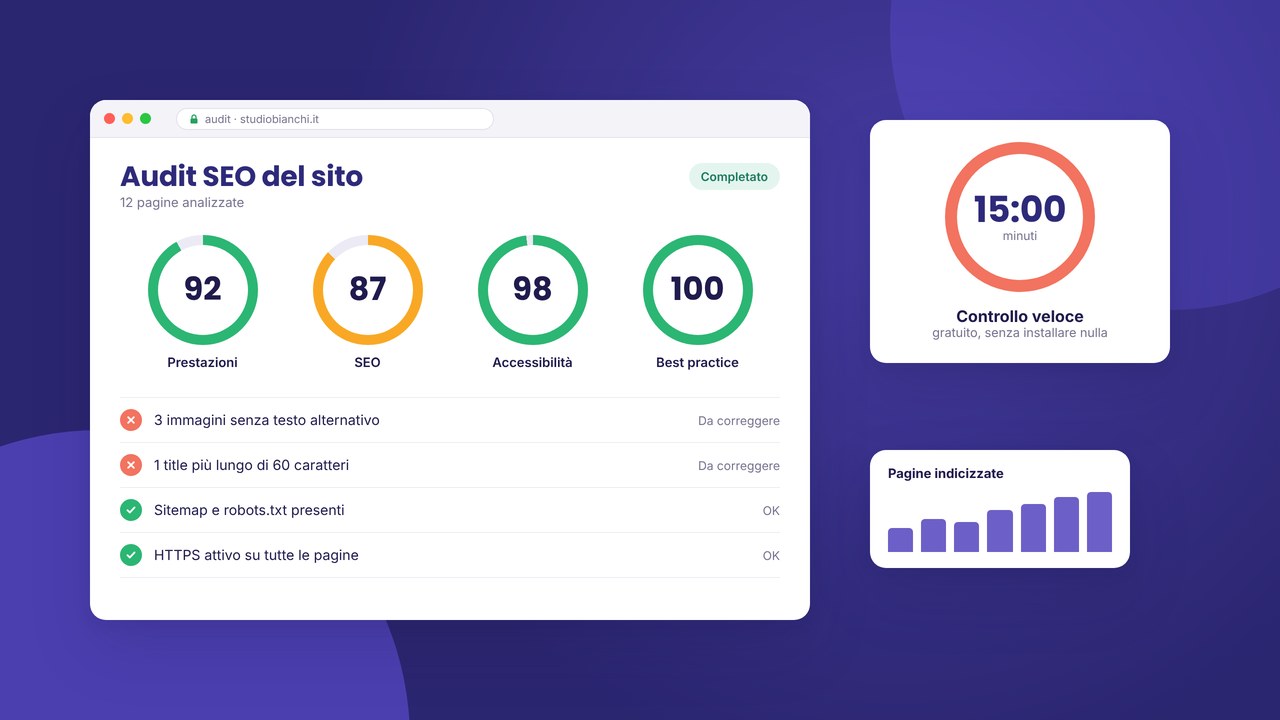
A site without HTTPS shows warnings in the browser and conveys little trust. With Martini Francesco the certificate is managed in the platform at the moment of publish: you do not have to buy SSL separately or configure Let’s Encrypt by hand. More in security and infrastructure.
Privacy policy and cookie policy
They must be reachable from every page (the footer). They explain who processes the data, for which purposes, which cookies you use and how to contact you for GDPR rights. Generic templates need to be adapted: the controller’s name, email, and the analytics tools actually installed.
Cookie banner and Consent Mode
If you use Google Analytics, Meta Pixel or maps with non-technical cookies, the visitor must be able to accept or refuse before non-essential trackers start. The platform supports Google Consent Mode: until the user chooses, the tags must not behave as if they had already consented.
What is often required vs good practice
- Required / strongly recommended: a privacy notice, a legal basis for contact forms, HTTPS on the public site
- If you use analytics/marketing: a detailed cookie policy, a banner, a record of preferences
- Good practice: minimise trackers, do not load 15 scripts “just because”
Contact forms and newsletters
Every form must have a clear purpose (“We will contact you about the quote”) and, if you store data in a CRM, mention it in the privacy policy. Avoid pre-ticked boxes for unsolicited marketing.
Revisions and restore
Did you get the legal copy or the banner wrong? Use the builder revisions, fix it and republish. It is faster than patching files over FTP, as on many self-hosted CMS platforms.
A quick GDPR-lite checklist
- HTTPS active on every page
- Privacy + cookie links in the footer
- A banner that works on mobile
- Analytics only after consent (if they are not strictly necessary)
- A form test with a real email
For the full technical publication path, read publish the site in 10 steps and hosting. For specific questions about your case, request a consultation.