How to become a Web Developer in 2025
Discover the fundamental steps to become a web developer: which skills you need, where to start and which tools to learn in 2025.
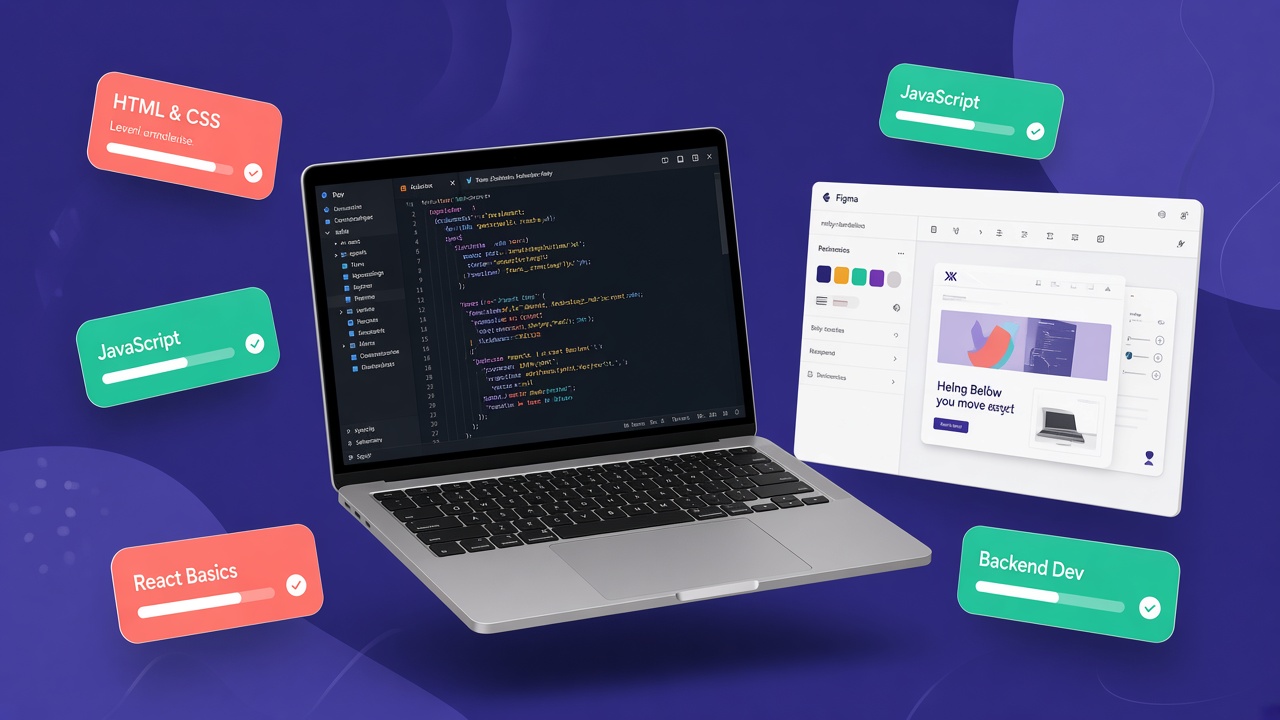
Becoming a web developer today means entering one of the most dynamic and in-demand sectors in the world. In an era in which everything goes through digital, the figure of the web developer is central for companies, startups and independent professionals. If you are wondering how to start from scratch and build a career in web development in 2025, this guide is designed precisely for you.
You do not need a specific qualification: you need consistency, curiosity and the will to learn by doing. Here is a structured path to find your bearings and grow with method.
1. Choose your direction: Frontend, Backend or Full Stack?
Before you start, it is important to understand the areas in which you might specialise:
- Frontend Developer: takes care of everything the user sees and interacts with (layout, interfaces, animations, accessibility).
- Backend Developer: manages servers, databases, APIs and business logic behind the scenes.
- Full Stack Developer: combines frontend and backend skills, ideal for small projects or lean teams.
The choice depends on your inclinations: creativity and attention to UX? Go frontend. Logic, data and architecture? Aim at the backend. Do you want maximum flexibility? The full-stack path takes more time, but it opens many doors.
2. Learn the basics of the web: HTML, CSS and JavaScript
The three fundamental languages for every web developer are:
- HTML: the semantic structure of the page, the foundation for accessibility and SEO.
- CSS: style, responsive layout, animations and design systems.
- JavaScript: interactivity, DOM manipulation, API calls and client-side logic.
Study them in depth before moving on to frameworks. A common mistake is to skip the basics to chase React or Node.js: without solid foundations, every problem becomes a wall.
Recommended free resources: freeCodeCamp, The Odin Project, MDN Web Docs. A good exercise is to recreate the homepage of a famous site from scratch, then add interactivity progressively.
3. Build practical projects
The best way to learn is to build. Every project should be saved on GitHub and shown in the portfolio:
- A responsive personal portfolio with a projects section and a contact form.
- A blog with a comment system or a headless CMS.
- A web app with login/logout and a protected dashboard.
- A functional clone of a well-known service (todo list, weather app, simplified e-commerce).
Better a few carefully made projects than many incomplete ones. Document every project with a README, screenshots and an explanation of the technologies used.
4. Know the most used tools
Frontend:
- Frameworks: React, Vue or Svelte (React remains the most in demand on the market).
- CSS: Tailwind CSS, SCSS or CSS Modules to organise styles.
- Build tools: Vite for speed, Webpack where advanced configuration is needed.
Backend:
- Languages: Node.js, PHP, Python depending on the reference market.
- Frameworks: Express, Laravel, Django to structure APIs and server-side logic.
- Databases: PostgreSQL, MySQL for relational; MongoDB for document-based.
5. Learn Git and GitHub
Git is the standard for code versioning. With GitHub you will be able to work in a team, show your projects and keep track of changes. Practise with the basic commands: git init, git add, git commit, git push, git branch, git merge.
Understanding pull requests, code reviews and conflict resolution prepares you for real team work.
6. Create a portfolio that converts
Your personal site should contain:
- A short, impactful bio that explains who you are and what you offer.
- Projects with detailed descriptions, live links and code on GitHub.
- Links to LinkedIn, GitHub and other professional profiles.
- A working contact form that is easy to find.
Use a clean, mobile-friendly design. The portfolio is the first proof of your work: if the site is slow, confusing or not responsive, the message you send is not positive.
7. Prepare for the job market
Study offers on LinkedIn, We Work Remotely, Indeed and local platforms. Create a technical CV that highlights skills, projects and concrete results. Prepare answers to common interview questions:
- “How do you manage the lifecycle of a React component?”
- “What is the difference between
let,varandconst?” - “How would you optimise the performance of a slow page?”
Take part in meetups, online communities and open source: networking accelerates opportunities and growth.
8. Train your skills with challenges
Sites such as CodeWars, LeetCode and Frontend Mentor help you train logic, algorithms and the ability to turn a design into code. You do not need to become a competitive programming champion, but solving structured problems increases confidence and speed.
9. Stay up to date
The world of the web evolves every month. Follow newsletters (JavaScript Weekly, Frontend Focus), YouTube channels (Fireship, The Net Ninja) and creators on LinkedIn. Dedicate at least 30 minutes a week to stay up to date without overwhelm.
10. Essential cross-cutting skills
- Technical SEO: fast, structured and indexable sites.
- Web performance: optimisation of images, code and loading.
- Security: protection from XSS, CSRF, secure data handling.
- Accessibility: sites usable by everyone, a legal and professional requirement.
11. Start your career
Possible paths:
- Freelance: start with small local projects to build a reputation.
- Internships and placements: excellent for structured experience.
- Startups: dynamic environments where you learn quickly.
A practical tip: do not wait to feel “ready”. Start now, accept that the first projects will not be perfect and improve iteratively.
12. Never stop
A real developer never stops learning. After the first months, you might go deeper into TypeScript, Next.js, GraphQL, Docker and DevOps. Every additional skill widens the opportunities and the quality of your work.
Conclusion
Becoming a web developer in 2025 is more possible than ever. You need passion, dedication and the will to put yourself to the test. Every day is a new opportunity to learn something and build a future in the digital world. Start today, one step at a time.