Innovation and the Future of the Web
Technologies that will transform the digital world
A panorama of the technologies that are shaping the web: AI, Web 3.0, AR/VR, PWAs, edge computing, digital sustainability and how to choose which trends to adopt in your project.
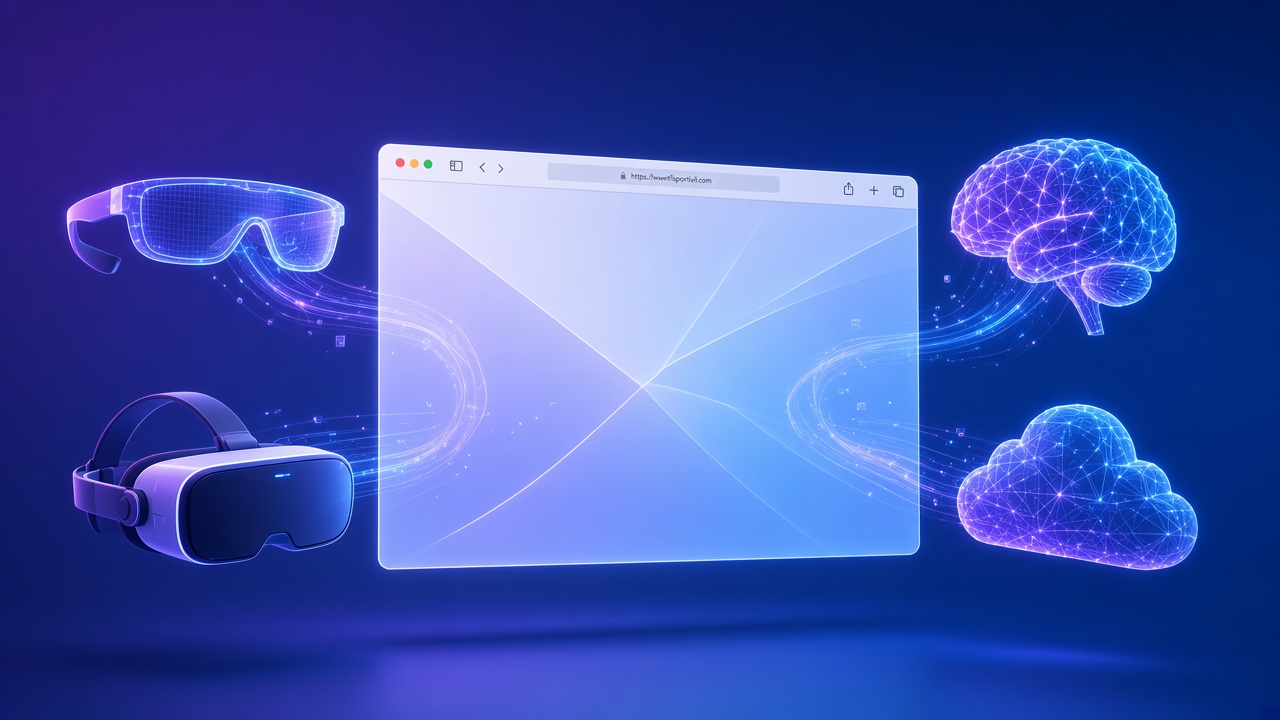
The web is never still. It changes continuously, often faster than we notice, and every year brings with it new technologies that change the way we build sites, design interfaces and live online experiences. Some trends stay niche, others instead become real turning points: they change habits, open new business possibilities and force developers and designers to rethink processes, tools and skills.
Today we are living a particularly interesting phase, because several innovations are growing at the same time: artificial intelligence is accelerating development and the production of content, Web 3.0 tries to shift control of the data towards the user, and immersive technologies such as AR and VR aim to make the online experience more “physical” and involving. In this post we look at which directions are most relevant and why it is worth knowing them already now.
What are the key innovations in the future of the web?
Artificial intelligence and machine learning
AI is no longer a futuristic concept: it has already entered daily workflows. On the web its strength is seen above all in three areas: automation, personalisation and analysis. Automating means reducing repetitive activities and speeding up technical operations that previously required time and attention. Personalising means adapting content and experiences based on the user’s behaviour, making the paths more fluid and “made to measure”. Analysing means extracting useful signals from large quantities of data to understand what works and what does not, not only at marketing level, but also of UX.
For anyone who develops and designs, this evolution brings a direct consequence: projects will not only be “pages”, but systems that change and adapt. And designing adaptive systems requires a more strategic approach, besides a technical one.
Web 3.0 and decentralisation
When we talk about Web 3.0, the central topic is decentralisation: the idea that data and transactions should not always pass through centralised platforms, but can live on distributed infrastructures, often based on blockchain. The concept is ambitious: to give the user more control over their data, make some operations more transparent and reduce dependence on a few large intermediaries.
In practice, Web 3.0 still has many challenges: usability, costs, technical complexity and mass adoption. However, it introduces an important change of mindset: in the future of the web, “trust” and digital “property” could become ever more central elements in the design of platforms and services.
Augmented reality and virtual reality
AR and VR aim to transform the web from a mainly “visual and textual” experience into a more immersive and interactive experience. Augmented reality, in particular, has enormous potential in the e-commerce world, in training and in product experiences: being able to see an object in your own environment, explore it and interact with it reduces friction and increases involvement.
The interesting aspect is that these technologies are becoming more accessible also on the web thanks to standards and tools that simplify integration. The result is that, in the coming years, we will see ever more hybrid experiences: sites that do not limit themselves to showing information, but make you “live” the interaction.
Progressive Web Apps
Progressive Web Apps are one of those trends that are less “spectacular” at media level, but extremely concrete. Their value lies in the fact that they bring the web experience closer to that of a native app: more solid performance, the possibility of working offline, notifications, rapid installation and fluid use on different devices.
For many projects, PWAs are an intelligent compromise: they make it possible to offer a modern experience without forcing the user to go through stores and classic installations. For companies it means reducing barriers to entry, and for developers it means working with web technologies while keeping a more “app-like” result.
Automation and low-code/no-code platforms
In recent years low-code and no-code have stopped being “toys” and have become real tools, especially to prototype, validate ideas and automate processes. The interesting thing is that they do not replace traditional development: they sit alongside it. They make it possible to create flows, integrations and MVPs in rapid times, and then eventually consolidate everything with a more custom solution when scalability or total control is needed.
In a market where time-to-market is fundamental, the ability to build and test quickly can make an enormous difference. And anyone who knows how to integrate low-code and custom development well will have a strong competitive advantage.
Common questions about web innovations
What does Web 3.0 really mean and how can it influence the future?
Web 3.0 indicates an evolution of the internet towards more decentralised models, where the user can have greater control over data and digital identity, and where some transactions happen without traditional intermediaries. If these models become simpler to use and more widespread, we could see more transparent platforms and services with a different relationship between users and companies.
What is the advantage of PWAs compared with a classic site?
The advantage is the experience. A PWA can be faster, more reliable, work even with a poor or absent connection and offer an interaction more similar to an app. In many contexts, this means more satisfied users and fewer abandonments, especially on mobile.
What role does AI have in web design and development?
AI is becoming an accelerator. It can speed up the writing of code, help identify errors, suggest improvements, generate assets and support the optimisation of the user experience through behavioural analyses. But the really important part is another: AI does not replace the vision, the method and the strategic choices. It simplifies and strengthens, but you still need someone who knows how to guide the project and build a consistent experience.
Edge computing and almost zero latency
Edge computing brings processing and data closer to the end user, reducing latency compared with centralised data centres. For the web it means APIs distributed on a CDN, partial rendering at the edge of the network, intelligent cache and more responsive real-time features. E-commerce, browser gaming, streaming and collaborative apps benefit: less waiting, more fluidity.
For developers and designers, the edge is not only infrastructure: it influences how to design loading states, offline fallbacks and data synchronisation. Platforms such as Cloudflare Workers, Vercel Edge Functions and Netlify Edge are making a distributed architecture accessible even to small teams.
Digital sustainability: the green web
Every web page consumes energy: servers, the network, users’ devices. The Green Web Foundation and similar initiatives push towards hosting powered by renewables, light code and optimised assets. A site that loads 5 MB of unoptimised images has a real environmental impact multiplied by millions of visits.
Practical choices include: modern image formats (WebP, AVIF), lazy loading, a reduction of third-party scripts, font subsets, dark mode for OLED and periodic audits with Lighthouse or Website Carbon Calculator. Sustainability and performance often coincide: what is fast for the user is often lighter for the planet.
How to evaluate which trends to adopt (and which to ignore)
Not every novelty should be integrated into your stack. Before investing time on Web3, the metaverse or a new framework, ask yourself:
- Does it solve a real problem of my users or of my business?
- Do documentation, a community and long-term support exist?
- Is the migration cost justified by the expected benefit?
- Can I test in a limited way (an MVP, a proof of concept) before scaling?
A good criterion is to adopt mature technologies for the core of the product and experiment with the novelties in secondary projects or proofs of concept. Useful innovation is that which improves the experience, not that which only impresses at a conference.
Skills that web professionals will need
The evolving panorama requires a mix of technical and cross-cutting skills: a basic understanding of AI and prompt engineering, familiarity with APIs and integrations, attention to privacy and security, design thinking oriented towards accessibility, the ability to communicate with non-technical stakeholders. The professional who knows how to translate business needs into concrete web solutions will always have space, regardless of the tool of the moment.
Conclusion
The future of the web will be ever more oriented towards three things: personalised experiences, more intelligent tools and more fluid interactions on any device. AI, Web 3.0, AR/VR and PWAs are not simply “novelties”: they are signals of where digital is going. Staying up to date does not mean chasing every trend, but understanding which technologies have a real impact, how they can be integrated into projects and which opportunities they open for anyone who develops, designs or manages an online product. Anyone who starts to study them today will have an enormous advantage tomorrow.