Projects and case studies: how a site that works is born
What projects and case studies really tell: goals, method, technical choices and impact metrics, beyond the portfolio images.
A well-made project is not only a page that looks good: it is a set of choices, constraints and priorities that lead to a concrete result. That is why case studies are so important for developers, designers and business owners. They tell the behind-the-scenes of a site or a web app, show how the final solution was reached and make clear why certain decisions were taken. When a piece of work is told well, there is no need to exaggerate: the method comes through and the value is understood on its own.
Why a case study is not a gallery
Many portfolios show only final screenshots. Useful for visual impact, insufficient for anyone who has to understand whether you are the right person for their problem. An effective case study answers operational questions:
- What was the context and the budget (time/euros)?
- Who decided and who used the product every day?
- What problems existed before (slowness, zero contacts, a dated brand)?
- What changed after launch, even in a qualitative way?
For an entrepreneur, this is the proof that they are not buying “pages” but a process. For a developer, it is the way to show skills beyond the dribbble shot.
A recommended structure: from the brief to the result
Every solid case study follows a logical narrative thread. You can adapt it, but avoid jumps that leave the reader without context.
- Context: sector, business goals (leads, sales, authority), legal or brand constraints.
- Research: interviews, previous analytics, competitor benchmarks, light personas.
- Content strategy: information architecture, sitemap, tone of voice.
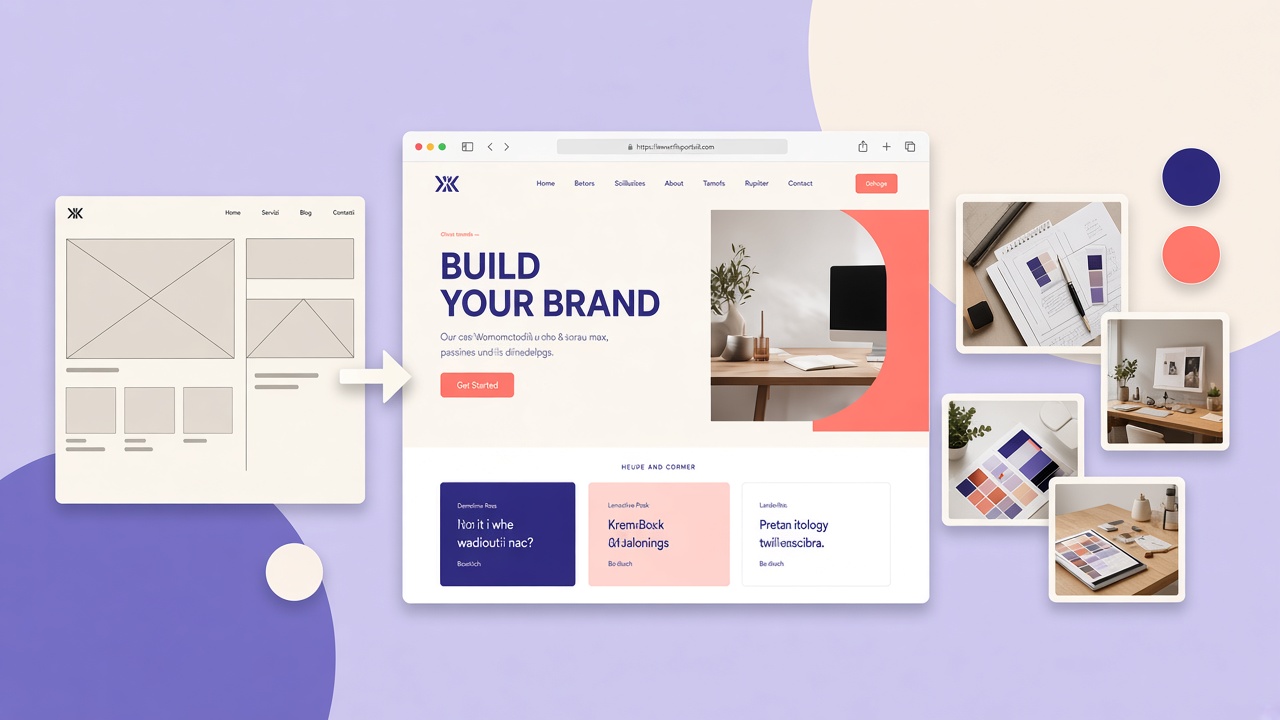
- Design: wireframes, iterations, visual system, accessibility.
- Development: stack, performance choices, CMS, integrations (CRM, payments, newsletter).
- Test and launch: cross-browser QA, mobile, forms, tracking, redirects.
- Results: before/after metrics, client feedback, lessons learned.
Example: for a B2B corporate site, tell how a homepage that was too generic was replaced by a hierarchy that leads in 2 clicks to “Request a quote”, with a short form and social proof above the fold.
What to highlight (beyond aesthetics)
Structure and design choices determine the user experience and the clarity of the content. Development reveals quality in the details: performance, responsiveness, clean code, the possibility of evolving over time.
- Performance: “LCP from 4.2s to 1.8s” with concrete actions (WebP images, reduced fonts, cache).
- Technical SEO: schema markup, correct headings, internal linking for services.
- Maintainability: reusable components, documentation for the marketing team.
- Accessibility: contrasts, keyboard focus, form labels.
Even a “simple” project can stand out: a well-built brochure site generates contacts and trust; a fragile one does not, regardless of the template.
Metrics and proof: numbers without hype
The most interesting part is the impact. There is no need to invent spectacular percentages: you need credible indicators.
- Organic traffic or form conversions (with a clear time window).
- Average time on the services page or a reduction in bounce rate.
- Number of quote requests / month.
- Load time and Core Web Vitals.
- Qualitative feedback from the client (a short quote with name and role).
If pre-launch data did not exist, say so: it is honest and strengthens trust. Then describe what you monitor now and how.
Mistakes to avoid in the narrative
- Only buzzwords (“innovative”, “disruptive”) without a solved problem.
- Hiding your role in large teams: specify responsibilities (UI, front, back, PM).
- Images that are unreadable on mobile or very long texts without subheadings.
- No call-to-action: invite people to contact you or to see related projects.
For anyone commissioning a site: what to ask
If you are a business owner, use case studies as a checklist. Ask the supplier:
- An example similar to your sector or goal.
- How they handle content, revisions and timelines.
- What happens after go-live (support, training, metrics).
A serious professional will show you process and trade-offs, not only glossy mockups.
The portfolio as a system, not as an album
When you put several case studies together, you build something worth more than a gallery: repeated proof of how you work, what you know how to solve and how you take an idea from “I would like” to “it really works”. Update the best projects, archive those that are dated, link blog articles that go deeper on topics (performance, typography, tools).
In short: a case study turns a piece of work into an understandable story, where the result is not accidental but the consequence of a clear process. It is the bridge between what you do and what the client needs to understand before they entrust you with the next site.